

Geologic Carbon Storage
Geologic carbon sequestration is the process of converting CO₂ into a supercritical fluid and injecting it into underground geologic formations to be stored indefinitely. The process is generally divided into three parts:
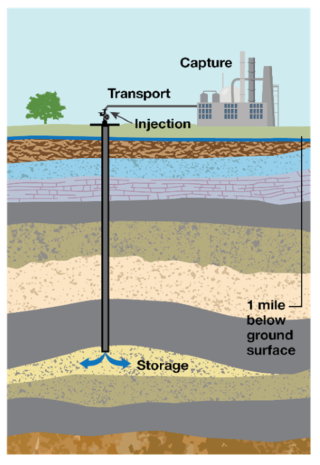
Capture: Carbon dioxide gas is collected from an existing facility’s flue gas emissions or directly removed from the atmosphere in a process known as Direct Air Capture. The captured carbon dioxide is then compressed for transportation and/or storage.
- Transport: Unless the storage facility is co-located with the source facility, the carbon dioxide is typically transported via pipeline to a suitable storage site.
- Storage: The captured carbon dioxide is injected through a Class VI well and stored permanently in deep underground rock formations, where trapping mechanisms work together to stabilize it. Each geologic storage site is subject to rigorous monitoring to ensure CO2 does not migrate from the injection zone.
Colorado has an estimated CO2 sequestration potential of over 720 billion tons, according to the Colorado Geological Survey. The storage potential is primarily in the Denver Basin, Cañon City Embayment, Piceance Basin, and Sand Wash Basin. A significant quantity of the storage potential in Colorado is classified as “very low storage cost” due to the location of carbon sources in relation to existing infrastructure including pipelines and UIC Class II operations paired with suitable geology for permanent storage. Considering these factors, the geologic sequestration of CO2 through injection into the deep subsurface has the potential to become prevalent in Colorado.
For a more detailed look at how CCS works, please see our report: Carbon Capture and Storage: Safety and Impact Considerations from Source to Sequestration